-
 play_arrow
ENERGY RADIO Energy Radio - Hit Music Only
music_note


Donald Trump: Greenland Must Be Ours. One Way or Another
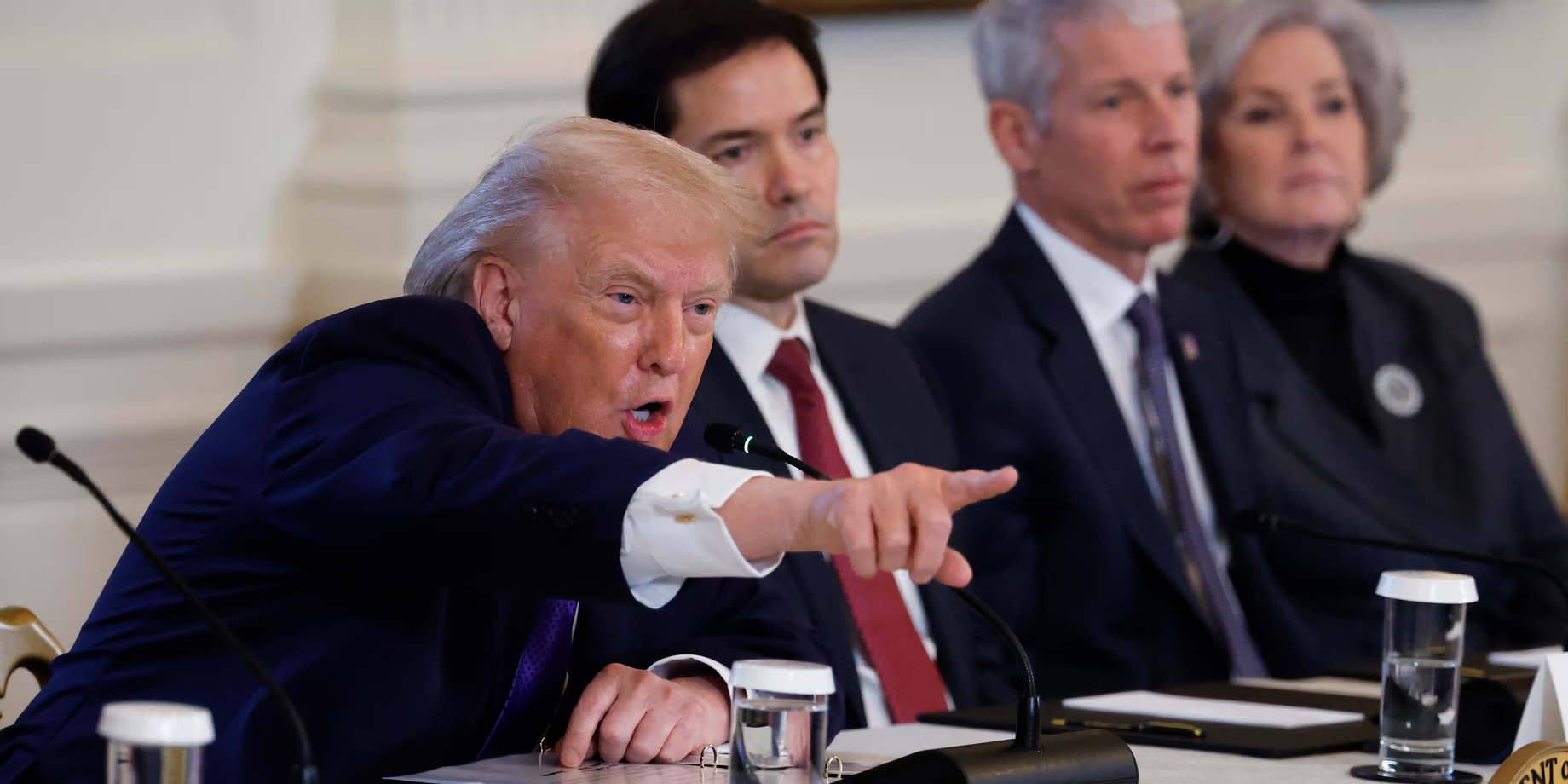
Greenland has returned to the centre of global politics as Denmark prepares for key talks with the United States. When U.S. Secretary of State Marco Rubio meets Danish and Greenlandic officials next week, Copenhagen will once again be forced to defend a territory that has been steadily moving toward independence for decades.

President Donald Trump’s renewed threats to seize Greenland, either by purchasing it or taking it by force, have triggered strong reactions across Europe. European leaders have rallied behind Denmark, warning that any attempt to annex Greenland would violate international law and threaten the post World War Two global order.
Behind the show of unity, however, lies a deeper dilemma. Denmark is spending political and diplomatic capital to protect a territory whose population increasingly wants to break away. Greenland has enjoyed expanding autonomy since 1979, and a 2009 agreement explicitly recognised the right of Greenlanders to independence if they choose. While all major political parties on the island support independence in principle, they differ on how and when it should happen.
Greenland’s strategic importance complicates matters further. Located between Europe and North America, the island plays a crucial role in Arctic security and hosts key elements of the U.S. ballistic missile defence system. For decades, this position has given Denmark outsized influence within NATO, despite relatively modest defence spending.
That influence is now under strain. If Greenland opts for independence or reaches its own agreement with Washington, Denmark risks losing much of its geopolitical relevance in the Arctic. Some Greenlandic politicians have already suggested negotiating directly with the United States, bypassing Copenhagen altogether.
The financial cost of maintaining the relationship is also significant. Denmark provides Greenland with an annual block grant of around 4.3 billion Danish crowns, roughly $610 million. Copenhagen also covers policing, the justice system and defence, bringing total annual spending close to $1 billion. In response to U.S. criticism, Denmark last year announced a 42 billion crown Arctic defence package aimed at strengthening security around Greenland.

Despite these pressures, debate within Denmark remains limited. Political outrage over Trump’s comments has largely drowned out discussion about whether holding on to Greenland is worth the cost. Critics warn that Denmark could exhaust its resources only to see Greenland walk away in the end.
Prime Minister Mette Frederiksen now faces a delicate balancing act. Standing firm is essential to defend sovereignty and international law, but it risks straining relations with Washington at a time when Western unity is seen as critical amid rising tensions in the Arctic.
As global attention turns north, Greenland’s future has become more than a regional issue. It is a test of sovereignty, alliances and power in an increasingly unstable world.
Have a story we should cover? Get in touch with our newsroom: info@energyradio.uk


Events
Latest posts

Oasis Fans Are Going Crazy – New 2027 Tour Could Be Announced Within Days

London Set for a Hot Weekend – 5 Amazing Places to Stay Cool in the Capital

5 Things Happening in London This Weekend (7–10 August 2026)

Wimbledon 2026 Final Predictions: Sinner vs Djokovic Showdown Before the Centre Court Finale

From Wild Card to Wimbledon Quarter-Final: The Fairytale Nobody Saw Coming at SW19


You must be logged in to post a comment.